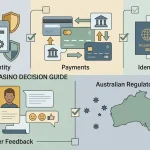
LuckyElf identity verification
 Available in AU
LuckyElf can request identity verification to confirm who controls an account, check age and contact information, and review information connected with account activity. Its current AML policy names valid identification and proof of address as baseline evidence and allows the operator to request additional documentation. The most useful preparation is therefore not to guess every document that might be requested, but to make sure your account details are accurate, your core identity evidence is current, and any files are submitted through the expected account channel. Verification can also arise before a withdrawal, so leaving it until money is already pending can add avoidable pressure.
Table of Contents
- Why identity verification exists on a casino account
- The baseline evidence described by LuckyElf
- When a verification request can matter most
- How to respond to an additional-document request
- Common sources of avoidable verification friction
- Verification and Australian-facing LuckyElf content
- Protecting sensitive documents during the process
- Keeping verification friction manageable
Why identity verification exists on a casino account
LuckyElf’s AML policy authorises checks of identity and contact information. It also links registration to age eligibility and says the operator can perform additional checks when required. In practical terms, KYC connects the digital account to a real person and gives the operator a way to test whether the information on the profile is coherent.
This is broader than clicking an email link. Email verification shows control of an inbox; identity verification checks personal details against evidence. That difference explains why a player can have an active login and still be asked for KYC later.
The baseline evidence described by LuckyElf
The current AML page identifies a valid passport or other identification paper and proof of address among the materials used for verification. It also requires registration information such as date of birth, full name, residential address and email address. LuckyElf reserves the right to ask for additional documentation, so the published list should be treated as a baseline rather than a closed checklist.
Prepare clear, current evidence that corresponds to the account profile. If a name, address or other material detail has changed, resolve the account information rather than hoping the mismatch will be ignored. Do not alter document images to make them look cleaner; legibility matters, but the evidence needs to remain authentic.
When a verification request can matter most
LuckyElf’s payment information recommends advance verification to help speed future withdrawals. Its bonus terms also describe checks before some winnings are processed. These are useful signals that KYC can become operationally important at the point where funds are moving out of the account.
For that reason, verification is easier to manage when it is treated as routine account maintenance rather than an emergency task. If the platform offers a way to verify before withdrawing, completing the requested process earlier gives time to correct a rejected or unclear file without a pending cashout adding urgency.
How to respond to an additional-document request
First, read the request literally. Identify what fact the operator is trying to verify and provide the requested category of evidence rather than a bundle of unrelated files. Second, check that the request appears inside the authenticated account area or has been confirmed through official support. Third, keep a note of the submission date and the files supplied.
If the request is unclear, ask support what information is missing before resubmitting. Repeatedly uploading different documents without understanding the problem can create more confusion. The AML policy permits additional checks, so a request beyond the baseline documents is not automatically inconsistent with the published process.
Common sources of avoidable verification friction
| Issue | Better approach |
|---|---|
| Profile name differs from ID | Use legal details and correct genuine changes through support |
| Old or inconsistent address | Keep the account profile current and use matching evidence |
| Unreadable image | Submit a clear, complete capture without editing the evidence |
| Unknown request channel | Confirm it through official support before sending sensitive files |
| Waiting until withdrawal | Verify earlier where the platform permits it |
Verification and Australian-facing LuckyElf content
LuckyElf uses AUD and publishes material aimed at Australian readers. Australia’s Interactive Gambling Act framework prohibits providers from offering online casino services to people in Australia, with ACMA responsible for federal enforcement.
This regulatory context does not change what the LuckyElf AML page says about its KYC process, but it is important when interpreting the brand’s Australian-facing presentation. Product localisation, identity verification and Australian regulation are separate questions and should not be collapsed into one.
Protecting sensitive documents during the process
Identity files deserve more care than ordinary account messages. Use a trusted device, verify the site address, avoid public networks where practical, and submit only what has been requested. Do not post KYC files in public complaint threads or send them to people who contact you through social media claiming they can accelerate a review.
If you need help understanding a request, describe the issue to support without attaching extra identity documents unless the support process specifically requires them. Keeping the document trail narrow reduces unnecessary exposure of personal information.
Keeping verification friction manageable
The best way to reduce verification friction is to keep the account truthful and consistent from the start, have current identity and address evidence ready, and respond precisely to any additional request. Verify before a withdrawal becomes time-sensitive when possible, and use official account or support channels for sensitive material. The operator can ask for further checks, so preparation is more reliable than assuming one fixed document list will cover every case.